


Colonial Cloud
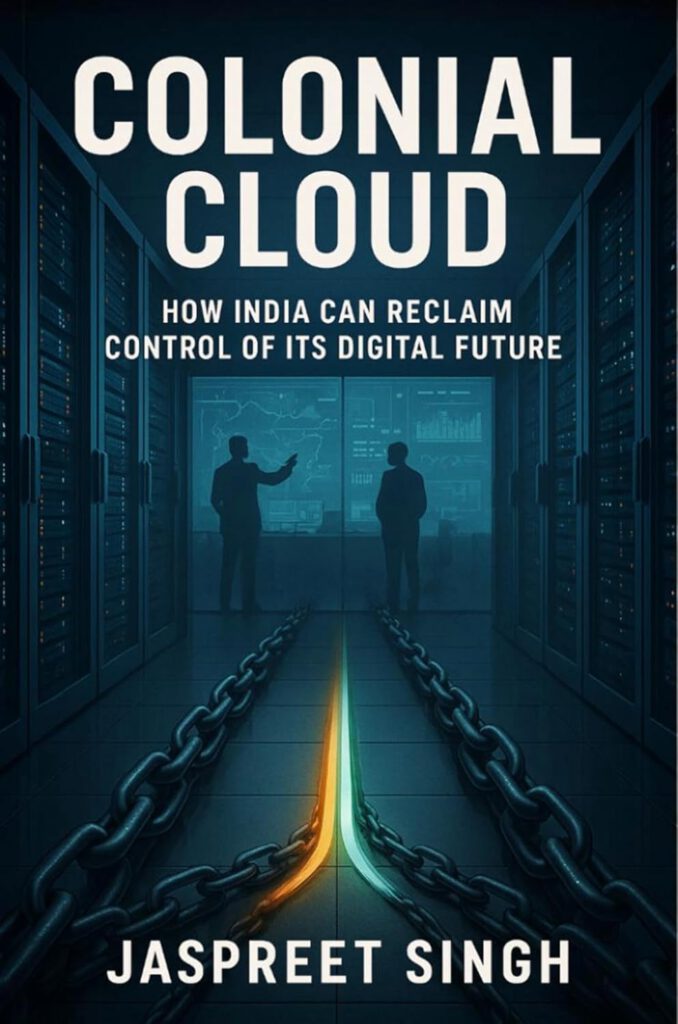
A FIELD MANUAL FOR DIGITAL SOVEREIGNTY
How India Can Reclaim Control of Its Digital Future
The Premise
One Monday morning a client called. “Mail is down.” It wasn’t a data-centre fire or a botched patch. It was a policy switch in a different jurisdiction — rippling through licenses, identity, and access. For a week, a perfectly legal Indian business was locked out of the tools it paid for and the data it considered its own.
That week changed everything. Colonial Cloud is not an anti-Big Tech book. It’s a pro-option book — a field manual for CIOs, founders, engineers, and policymakers who want capacity without illusion.
It translates sovereignty into practical moves: keys you hold, routes you control, contracts you can exit, logs you can produce, and drills you can run. It separates slogans from systems — not “local good / foreign bad,” but “what’s the risk, where’s the lever, what’s the cost to switch?” And it anchors every claim in facts you can verify, because in production, vibes don’t page in at 3 a.m.
The next time a deck makes “cloud by default” sound inevitable, you’ll pause and ask: who holds the keys — and how fast can we leave?From the Preface
Inside the Book
Chapter 1 — Who Holds the Keys?
Kill-switches, jurisdiction vs geography, and the sovereignty stack you should audit today.
Chapter 2 — From Sea Routes to Data Routes
How power travels through fibre — from spice trade logic to subsea cable economics.
Chapter 3 — The Sanctions Lockout
Dissecting a real service suspension so your team never has to improvise that week again.
Chapter 4 — Data Is Not Oil
Cleaning up the cliché — who owns the wells, who owns the refinery, and who profits.
Chapter 5 — India-Friendly Alternatives
Sovereign options you can actually procure without trading speed for control.
Chapter 6 — The Attention Layer
Feeds, misinformation, and why platform reach is always borrowed reach.
Chapter 7 — Lessons from China’s Capacity
What to learn from scale — without importing the censorship model.
Chapter 8 — Follow the Money
The lunch money India quietly exports every month in cloud spend — and how to keep more of it working here.
Chapter 9 — Pipes, Compute & the Rulebook
Mapping the infrastructure that makes digital life actually work in India.
Chapter 10 — Sovereignty in Checklists
Contract clauses, RFP language, exit drills, and audit templates you can paste today.
Bonus Chapter 11 — The Vendor Script
How “cloud by default” became India’s lazy habit — and a field manual for pushing back with facts, not feelings.
Who This Is For
CIOs & CTOs who must keep lights on while navigating jurisdiction, sanctions, and vendor lock-in.
Founders & Engineers who hate surprises and want architecture designed for exit from day one.
Procurement Teams who read the fine print and need contract clauses that actually protect.
Policymakers who want digital capacity without illusion — standards and leverage, not slogans.
I don’t reject innovation, but it must be watched carefully. Architecture is policy in disguise.Jaspreet Singh
About the Author
Jaspreet Singh is a Digital Ecosystem Architect with 14+ years in infrastructure, networking, DNS, and security, creator of D.NIX (DNS & domain intelligence platform).
This book grew from six years of motivation, real-world outages, vendor negotiations, and the conviction that convenience without sovereignty is a liability — not a strategy.
ISO 27001 · CHFI · CEH · AZ-500 · AZ-104
Ready to change the defaults?
Use the checklists. Steal the contract language. Run the exit drill. Hold your own keys.
Views expressed are the author’s own. Every fact checked against best available sources as of October 12, 2025.